


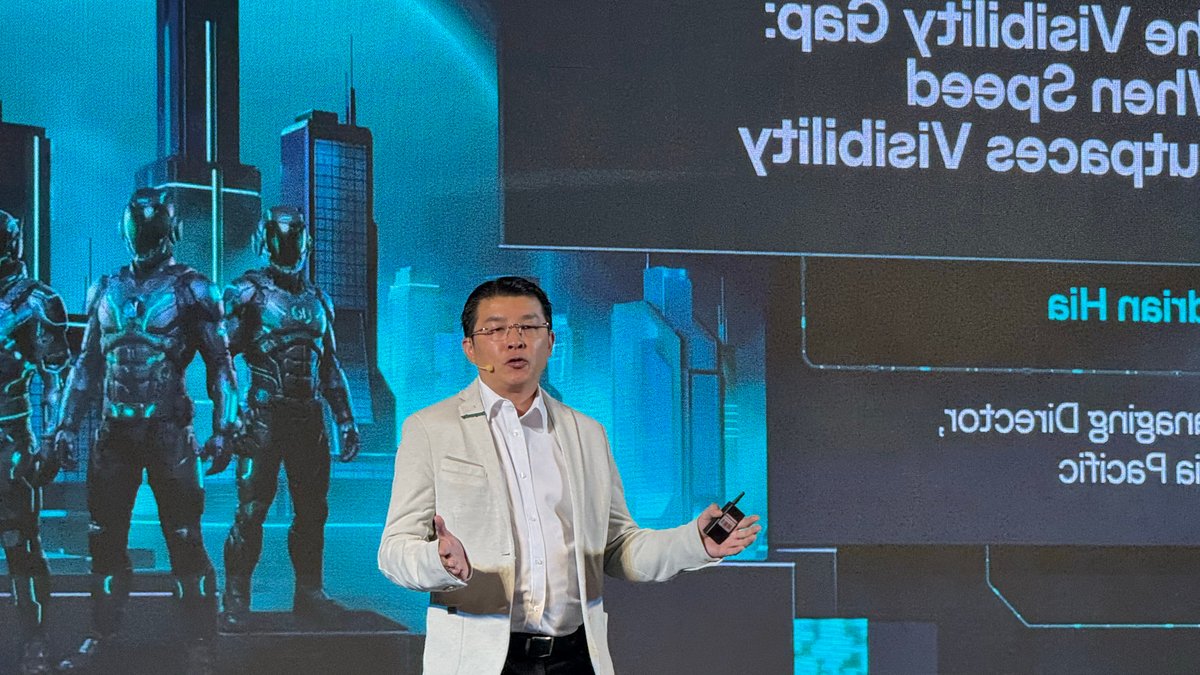
Artificial intelligence helps businesses become more productive, but it is also accelerating the speed of cyberattacks.
According to the cybersecurity vendor, organisations across Asia Pacific are facing a growing “visibility gap”, where attackers can infiltrate systems and remain undetected for extended periods. Such a gap implies that cybersecurity is no longer just about responding quickly to threats, but about seeing what is happening behind closed doors.
The Race Against Invisibility
Adrian Hia, Managing Director for Asia Pacific at Kaspersky, argued that as speed and connectivity reshape modern enterprises, security teams face growing blind spots. He noted that the current environment is not merely a race against time, but a race against invisibility.
The firm reported that AI-assisted attacks, cyber sabotage targeting IT and operational technology, and sophisticated cyberespionage campaigns are on the rise. In 2025, Kaspersky detected and blocked about 500,000 unique malicious files daily, a seven percent increase from the previous year.
Related: Tune Talk Launches Epik+ Family Safe Service
Kaspersky also observed a surge in malware disguised as agentic AI software. The firm identified more than 15,000 such samples this year alone. These agents often rely on third-party frameworks and APIs, meaning a single compromised upstream component could affect multiple downstream systems.
Real-world examples illustrate the threat. Just weeks ago, Japan’s Nichirei Corp suffered a cyberattack that disrupted its logistics network. Meanwhile, India’s manufacturing sector has become a hotspot for industrial ransomware, with groups consistently paralyzing factory floors and industrial IT services.
This phenomenon points to a fundamental shift where the speed of integration often outpaces the speed of defense. By depending on third-party plugins and APIs, organisations are essentially building their security perimeters out of components they do not fully control. This external dependency complicates the task of defenders, who must now monitor not just their own networks but the supply chains of the tools they use.
Slow Detection Times
Compromise Assessment data from Kaspersky indicates that many organisations are slow to discover security incidents. The investigation found that 31 percent of analysed incidents were active for more than three months before discovery. These delays allow attackers to move laterally and escalate privileges before defenders can react.
Related: China Closes AI Technology Gap
For high-severity compromises, 52 percent were only detected after remaining unnoticed for over 90 days. The oldest incident investigated had gone undetected for four years. Kaspersky states that relying on security products alone is insufficient to compensate for gaps in monitoring and operational readiness.
Hia added that a mature Security Operations Centre is becoming business-critical because it provides the visibility and expertise needed to detect threats before they escalate. To address these issues, Kaspersky advocates for a modern SOC supported by AI. The company has integrated machine learning models into its products since 2004, using anonymised telemetry to automate threat analysis.
Its enterprise offering, the Kaspersky Next platform, combines endpoint protection with XDR capabilities to turn raw data into structured intelligence. Kaspersky also provides managed security services like compromise assessment and incident response to cover the full incident management cycle. For companies struggling to implement these systems, the firm offers SOC Consulting to assist with setup and ongoing maintenance.


